 admin
admin Why Mismatched Seating and Lighting Fails
Dining rooms often fail not because of poor furniture choices but because seating and lighting are selected independently of each other. A chair that looks striking under showroom fluorescents can appear flat or oddly proportioned once placed beneath a fixture with a different scale or color temperature. Homeowners frequently buy chairs first, then lighting, without considering how the two elements will interact once installed. The result is a room that feels disjointed even when each individual piece is well made.
This mismatch shows up most clearly in height and proportion. A pendant or chandelier hung too low over a table crowds tall chair backs, while one hung too high leaves the seating area dim and the room feeling unanchored. Color temperature compounds the issue: warm-toned wood or upholstered chairs can look muddy under harsh white light, and cool metal frames can seem sterile under overly amber bulbs. Buyers rarely test these combinations before purchase, since chairs and fixtures are typically sold in separate categories from separate retailers. Retailers rarely display a chandelier and a full seating set side by side, leaving buyers to guess how the two will look together once both are installed at home.
Choosing Your Fixture Before Your Chairs
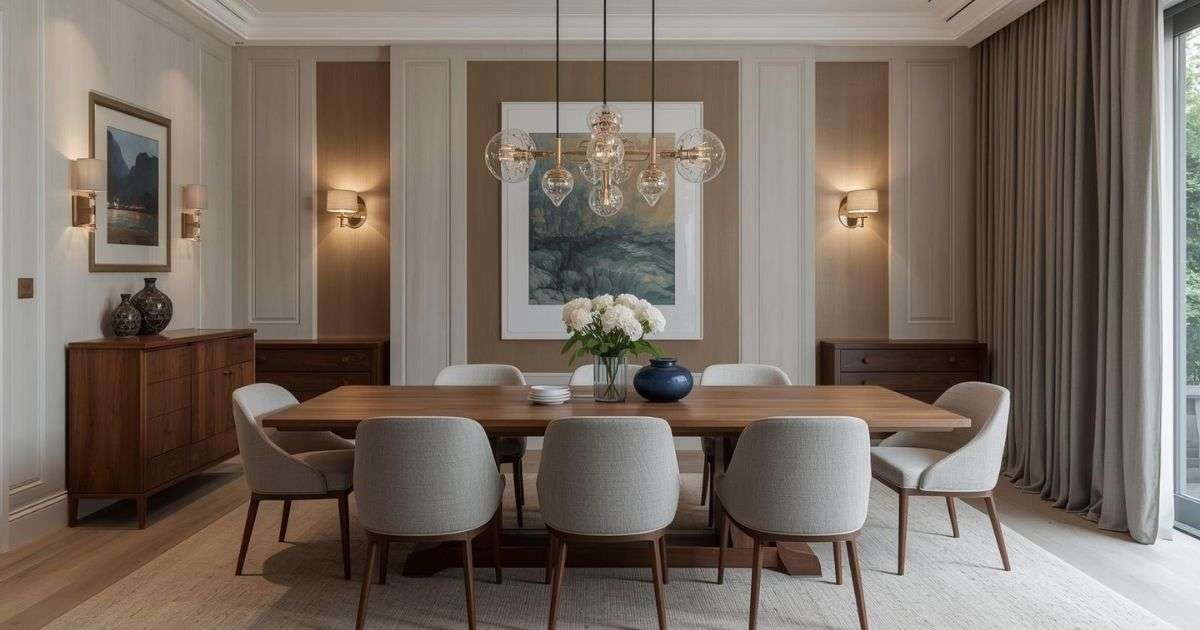
A better method starts with treating seating and lighting as a single design decision rather than two separate purchases. Designers who work on dining spaces regularly recommend choosing the light fixture before finalizing chair upholstery or finish, since the fixture sets the tone for color and reflectivity in the room. For rooms built around dark wood tables or black metal chair frames, a modern black chandelier can anchor the palette and give the space a cohesive, intentional look rather than a collection of unrelated pieces. Working from the fixture downward also makes it easier to judge scale, since a chandelier’s diameter and drop height are fixed points that chairs need to complement rather than compete with.
Once the fixture is chosen, seating decisions become more straightforward. Chair height should leave enough clearance below the lowest point of the fixture, typically around thirty inches, so no one feels crowded when standing to be seated. Finish and material should echo at least one element of the fixture, whether that is a matte black frame, a brushed metal accent, or a warm wood tone repeated in the table legs. This sequencing avoids the common problem of finding an ideal chair only to discover no fixture on the market complements it. Rugs and tablecloths can also pick up an accent color from the fixture, reinforcing the connection between what hangs overhead and what sits at the table.
Brightness and Ambiance: Finding the Right Balance
Shoppers evaluating dining fixtures should look closely at how a piece handles both direct and ambient light, since dining rooms need brightness for tasks like reading a menu or helping a child with homework, along with softer light for evening meals. Dimmable fixtures solve most of this problem on their own, letting one chandelier serve multiple functions throughout the day. Bulb compatibility matters as well, since some fixtures restrict wattage or bulb shape in ways that limit future flexibility. A fixture that only accepts a narrow range of bulbs can become a maintenance headache within a few years as certain bulb styles are discontinued. Adjustable arm fixtures or multi-bulb chandeliers with separate switches give even more control, letting a household brighten one side of the table while dimming the other for a smaller gathering.
Energy use deserves consideration too, particularly for fixtures with multiple bulbs that stay on for hours during family dinners. Reviewing ENERGY STAR lighting guidance before buying can help households compare bulb options and estimate long-term operating costs across different fixture styles. Certified LED bulbs now match the warmth of older incandescent lighting closely enough that most buyers notice no difference in ambiance, while using a fraction of the electricity. Combining an efficient bulb choice with a well-scaled fixture and complementary seating produces a dining room that looks considered and functions well for years, regardless of how design trends shift around it.